
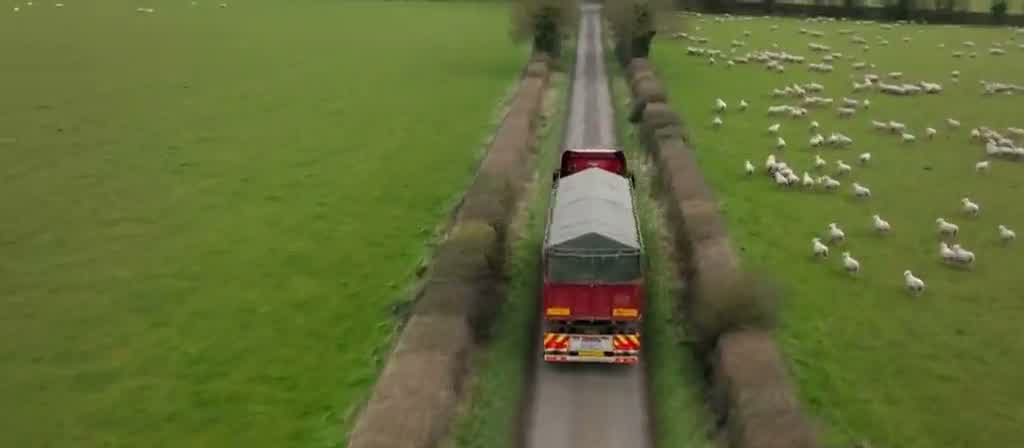
Livestock lorry finance
Livestock lorries are built for one job and one welfare standard, and funders assess the deck build and the haulage work behind it together.
Not picked a truck yet? See used trucks and trailers from UK dealers, priced per month, on HGV Monthly.
- FCA regulatedAppointed Representative, FRN 1031964
- 60+ lendersWhole-of-market panel, not one bank
- 5.0 from 19 Google reviews
- No credit checkEnquiring leaves no mark on your file
Yes. A livestock lorry funds as a commercial vehicle with the decked livestock body treated as specialist equipment. Used livestock lorries fund, and the market for them is small but steady across the UK and Ireland. The point that shapes the assessment is the narrowness of the body, a livestock deck cannot carry anything else, so resale depends on other stock hauliers wanting it. Against that, funders recognise that livestock haulage is a long-established trade with consistent demand, and experienced operators with market and abattoir work fund without difficulty.
Who finances this
Livestock hauliers running to markets and abattoirs, larger farming businesses moving their own stock between holdings, and livestock dealers. The trigger is usually the cost of contracted haulage across a year of market runs, or a welfare and biosecurity requirement that makes shared transport impractical. Pedigree breeders and show exhibitors form a smaller segment, buying for the standard of the vehicle as much as its capacity.
How lenders see it
This is a niche placement handled by funders with agricultural and specialist HGV appetite. Body builders such as Houghton Parkhouse have recognised names and their decks hold value, while a homemade or heavily modified body does not. Funders check deck condition, ramp and gate operation, ventilation and the state of the floor, since welfare compliance depends on all of them. The operator side is where the deal is made: livestock haulage requires transporter authorisation and welfare training, and funders will ask about it. Established hauliers with market contracts and abattoir relationships read well. Farming businesses are assessed on the farm accounts rather than on haulage income. Declines tend to be new entrants with no authorisation and no market work, or bodies with failed floors and corroded decks.
Buying used
Yes, used livestock lorries fund, typically to around ten years, with deck, floor and ramp condition mattering far more than mileage.
Also in HGV and truck finance
See everything we fund in HGV and truck finance →
Fuel and wages before the invoice clears
Flowzo funds operating costs against 30 to 60 day customer terms, including the financial standing requirement on an operator licence.
Buying a truck or trailer at auction? We can give you an indicative decision before you bid, and we list every UK machinery auctioneer and livestock mart.
Machines we have funded
| Houghton Parkhouse livestock body | British-built decked body for stock |
|---|---|
| Scania P280 livestock | Rigid stock lorry for market runs |
| DAF CF 260 livestock | Six-wheel rigid with decked body |
| Volvo FM 330 livestock | Heavy rigid for long stock journeys |
| Iveco Eurocargo 180E livestock | Eighteen tonne stock lorry |
| Plowman Brothers livestock trailer | Decked trailer for cattle and sheep |
| Houghton Parkhouse Supreme trailer | Multi-deck livestock trailer |
| Isuzu Grafter 7.5t stock body | Small stock lorry for farm use |
| Mercedes-Benz Atego 1524 livestock | Mid-weight chassis for stock bodywork |
| Ifor Williams livestock trailer | Towed stock trailer for farms |
What a livestock lorry actually costs to buy
Prices for a livestock lorry advertised by UK suppliers run from £9,500 to £159,950 (checked 28 October 2026). VAT bases differ between these listings and are stated against each figure.
Mileage barely moves the price for livestock lorries; body spec does. A 2018 Mercedes-Benz Atego 1218 day-cab cattle truck with 1 mile on the clock sold for £34,950 on Autotrader, while a 31,000-mile Iveco livestock truck on the same site was listed at £159,950, over 4.5x more despite both being essentially unworn. The gap tracks deck configuration and GVW, not wear: rigid single-deck day cabs (DAF, Mercedes) cluster £9,500-£34,950, while bigger artic-class cattle wagons jump straight past £80,000. Buyers comparing lorries on mileage/year alone, as they would for a regular truck, will miss this.
| Machine | Asking price | Seen at |
|---|---|---|
| DAF cattle lorry, 2014, Newry, Co. Down (Northern Ireland) | £9,500 VAT not stated | donedeal.co.uk |
| DAF LF Euro6 Cattle Lorry, 2015, Newry, Co. Down (Northern Ireland) | £11,800 VAT not stated | donedeal.co.uk |
| DAF Livestock truck, 242,500 miles | £14,995 inc VAT | autotrader.co.uk |
| DAF Livestock truck, 170,882 miles | £23,950 +VAT | autotrader.co.uk |
| DAF LF45 3.9, 2005 (05 reg), 14,110 miles | £25,000 VAT not stated | autotrader.co.uk |
| Mercedes-Benz Atego 1218 4x2 Day Cab Livestock Cattle Truck 5.1, 2018 (68 reg), 1 mile | £34,950 VAT not stated | autotrader.co.uk |
| Volvo Livestock truck | £84,950 +VAT | autotrader.co.uk |
| Iveco Livestock truck, 31,000 miles | £159,950 VAT not stated | autotrader.co.uk |
Prices checked 28 October 2026 on autotrader.co.uk, donedeal.co.uk. These are asking prices observed on dealer and marketplace listings, shown as examples. They are not a quote or an offer of finance, and they move with the market. Check the current advert before budgeting.
How finance works on a livestock lorry
The prices above are what a seller is asking. What a funder will actually do with the purchase is a separate question, and it is the one that decides whether the deal happens.
| Question | Typical answer |
|---|---|
| Term available | 12 to 72 months. Most agreements sit between 24 and 60 months; anything shorter or longer needs a funder check before you rely on it. |
| Age of the asset | There is no single cut-off. It depends on the asset class, and condition, hours and resale value are underwritten rather than the year alone. Tell us the age and we will say before you commit. |
| Buying from a private seller | Often possible, but case by case. It needs a funder who will write it, an inspection and proof of ownership, so say whether the seller is a dealer or a private seller when you enquire. |
| Deposit | Frequently nil where the credit profile is standard. Where it is not, typically 10–20%, nearer 20% if a default is recent. |
| VAT on the purchase | Both approaches exist, depending on the funder. The agreement is commonly written on the ex-VAT price with the VAT paid upfront and reclaimed, though some funders will include the VAT in the agreement. |
General guidance from our own funder panel as at 31 October 2026, not a quote and not an offer of finance. All finance is subject to status and to the funder's own criteria.
Do I need transporter authorisation to fund a livestock lorry?
You need it to operate one legally for commercial journeys, and funders will ask. Animal welfare rules require authorisation, competence certificates for drivers and approval of the vehicle for longer journeys. It is not a finance requirement as such, but a vehicle that cannot legally carry stock cannot earn, which is the underwriter’s real question.
Can a farm fund a livestock lorry for its own stock?
Yes, and it is common with larger farming businesses. The assessment is based on the farm accounts and land position rather than on haulage income, which often makes it more straightforward than a standalone haulage application. Welfare authorisation requirements still apply depending on journey length and whether the movement is commercial.
Is a rigid or an artic livestock outfit better?
Rigids suit market runs and farm collections with tight access, and many stock hauliers run a rigid with a drawbar trailer for flexibility. Artic outfits carry more per trip for abattoir and long-distance work. Resale is decent for both; the choice should come from the journeys and the yards you actually get into.
What condition issues matter on a used livestock body?
Floor condition above all, constant washing and effluent attack the deck structure from underneath. Also check ramp and gate hydraulics, deck locking, ventilation and any corrosion at the joints. Funders inspect for these because a failed floor is a welfare failure as well as a repair bill, and it destroys the resale value.
Is livestock haulage a hard sector to get funded in?
It is a niche rather than a hard sector. Fewer funders write it, so the panel is narrower, but those who do understand that stock movement is constant and the trade is long-established. Experienced hauliers with market and abattoir work are funded routinely. The difficulty is concentrated at the new-entrant end.
Still choosing the machine? HGV Monthly is a UK marketplace of used trucks, lorries and trailers from dealers, with a monthly finance price on every listing.
Browse used trucks on HGV MonthlyTell us what you need
About a minute of plain questions, and no documents to dig out.
Prime is established and profitable with clean credit. Specialist covers newer businesses and credit that needs explaining, the asset carries part of the risk, so finance is often available where an unsecured loan is not.
Illustrative only, not a quote, a flat rate is not an APR, so the APR on a given agreement will be higher. VAT and fees excluded.
Start my enquiryNo credit check, and enquiring leaves no mark on your credit file. Finance is subject to status. We are a credit broker, not a lender.

Only pricing it up?
An enquiry is a conversation, not an application. Nothing runs against your file until you tell us to go ahead.
No credit check to enquire
Your credit scoreUntouched
Conor reads every enquiry himself. We will call you within 24 business hours, and it will be the person who actually arranges the finance, not a call centre, and not a form that disappears.
A real person on your side
One adviser from your first enquiry to the money in your account. No call centres.
Your adviser
Conor HullMon to Fri, 9am–6pm
5.0 from 19 Google reviews
Thinking about livestock lorry finance?
A few questions, and we will tell you what the panel can do. No obligation, and no call centres.