The situation
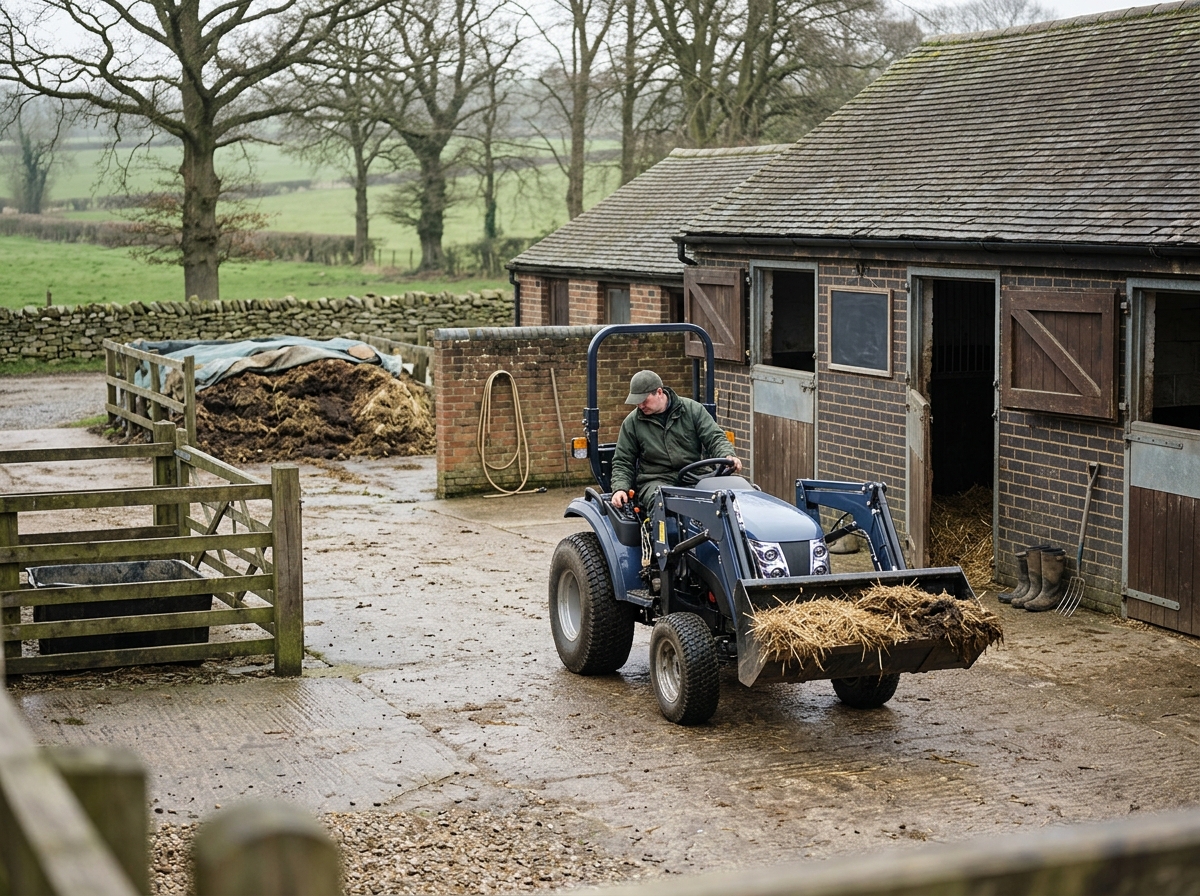
An equestrian business needing a tractor for yard work. It bought a used John Deere 640 at £15,500 through an agricultural dealer and financed it over four years with no deposit.
The challenge
A yard buys the same equipment a farm buys, works the same ground in the same weather and uses the same dealers. Its income looks nothing like a farm’s. There are no stock sales, no harvest and no subsidy payments — there are livery fees, training, lessons and competition income, spread differently through the year and derived from customers rather than commodities.
That mismatch is the whole difficulty. A lender assessing the application against a purely agricultural template goes looking for income patterns it expects, does not find them, and can reach the wrong conclusion about a perfectly sound business.
What we did
We placed it with a lender that assesses the business on what it actually does rather than on what its machinery implies. A compact tractor doing yard work is not being asked for the hours a contracting tractor does, and a funder who understands that prices the residual on the machine sensibly rather than treating age alone as risk.
Key outcome
Eleven days from first contact to the supplier being paid, with no deposit and a term matched to the working life of the machine.
“Most asset finance is not six-figure facilities and complicated structures. It is a working business that needs one machine and does not want to take the cost out of its current account in one movement. Knowing which funders read a sector properly is most of the job.”
— Conor, CW Asset Finance
Every application is assessed on its own merits and all finance is subject to status and lender approval. This is one client’s outcome and is not a guide to what any other business will be offered.
Explore rural & agricultural finance →