
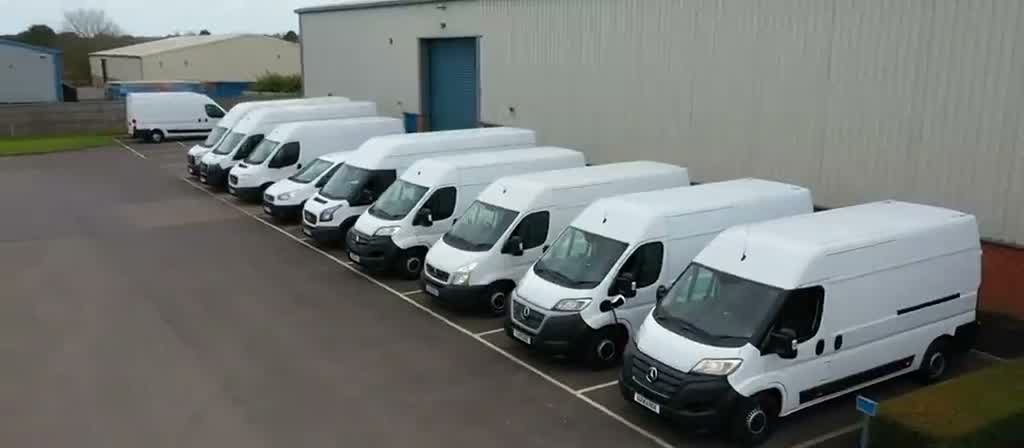
Electric van finance
Battery vans funded for the businesses that actually benefit, urban multi-drop, clean air zones and fleets with a depot to charge at.
Not picked a van yet? See used vans and pickups from UK dealers, priced per month, on Van Monthly.
- FCA regulatedAppointed Representative, FRN 1031964
- 60+ lendersA panel of lenders, not one bank
- 5.0 from 20 Google reviews
- No credit checkEnquiring leaves no mark on your file
Yes, electric vans are fundable, and the panel of lenders writing them has widened considerably. They are treated as commercial vehicles and usually funded on hire purchase or a lease. The honest complication is residual value. Used values for battery vans have been less settled than for diesel, so funders are cautious about what a three or four-year-old eLCV will be worth, and that shapes the structure they offer. The other thing owners underestimate is charging: a van that cannot reliably charge overnight at base is an operational problem no finance agreement can fix.
Who finances this
Urban multi-drop couriers, facilities and maintenance contractors working inside clean air and ultra low emission zones, local authority suppliers with emissions clauses in their tenders, and service businesses running predictable daily mileage from a fixed depot. The trigger is usually a zone charge that has started biting, a customer sustainability requirement written into a contract renewal, or a fleet policy that has set a date for the last diesel.
How lenders see it
Underwriting an eLCV is mostly a residual value question. Funders have less historical data than they have on diesel vans, so some structure agreements to reduce their exposure at the back end, and others will only write new. Used electric vans are getting easier to place but battery state of health is now a genuine underwriting item, a report from the dealer helps. Manufacturer battery warranties are looked at closely, because a transferable warranty supports the resale case. Fleet applicants with depot charging get the warmest reception since the funder can see the vehicle will actually be used. Sole traders and new starts are placeable but the deposit expectation tends to be firmer than on an equivalent diesel. Declines cluster around older used eLCVs with unknown battery history, imported vehicles, and operators whose duty cycle plainly exceeds the realistic range.
Buying used
Yes, though used electric vans are a younger market, lenders will want battery health evidence and remaining manufacturer warranty, and will value more conservatively than a diesel equivalent.
Also in van and light commercial finance
See everything we fund in van and light commercial finance →
Van buying guides
We are a broker, not a dealer. We have no stake in which van you choose. These are written on that basis.
The van is one cost
Flowzo covers fuel, wages and the wait for customers to pay, working capital rather than the vehicle itself.
Machines we have funded
| Ford E-Transit | Electric large van for urban fleets |
|---|---|
| Ford E-Transit Custom | Electric medium van for trade use |
| Vauxhall Vivaro Electric | Medium electric van for city work |
| Mercedes-Benz eSprinter | Large electric van for clean air zones |
| Renault Master E-Tech | Electric large van for distribution |
| Maxus eDeliver 3 | Small electric van with long warranty |
| Maxus eDeliver 9 | Large electric van with big battery |
| Citroen e-Dispatch | Electric medium van for multi-drop |
| Peugeot E-Boxer | Large electric van for parcel work |
| Volkswagen ID. Buzz Cargo | Electric medium van for retail fleets |
What a used electric van actually costs to buy
Prices for a used electric van advertised by UK suppliers run from £4,794 to £20,100 (checked 28 October 2026).
The badge on the van does not fix the price: two live listings for the identical spec, a 2022 Vauxhall Vivaro 3100 100kW Dynamic 75kWh H1 Van Auto, sat at £13,198.80 and £14,998.80 with no stated difference in condition or mileage, a £1,800 gap on paper-identical trim. The .80 pence ending on this and most other eBay trade listings (£10,198.80, £11,998.80, £13,198.80, £14,998.80) is not a currency-conversion artefact; each one is a round ex-VAT trade price (£8,499, £9,999, £10,999, £12,499) with 20% VAT added for the headline display, so the figure that matters for a business buyer is the round number underneath, not the quoted total. Only the Ford E-Transit listing stated its basis plainly: £16,750 + VAT, displayed as £20,100.00.
| Machine | Asking price | Seen at |
|---|---|---|
| 2019 Peugeot e-Partner 49kW SE FWD L2 H1 6dr Panel Van, Electric Automatic | £4,794.00 VAT not stated | ebay.co.uk |
| 2019 Peugeot Partner 552 SE 67 Van Auto, Panel Van Electric Automatic | £5,394.00 VAT not stated | ebay.co.uk |
| 2018 Nissan e-NV200 80kW Tekna Van Auto 40kWh, Panel Van Electric Automatic | £5,988.00 VAT not stated | ebay.co.uk |
| 2022 (72 reg) Citroen e-Dispatch 1000 Enterprise Pro 75kWh MWB, low mileage | £10,450.00 VAT not stated | ebay.co.uk |
| 2021 Mercedes-Benz Vito 114e 41kWh Progressive Panel Van 6dr, Electric Auto FWD | £10,740.00 VAT not stated | ebay.co.uk |
| 2022 Vauxhall Vivaro 3100 100kW Dynamic 75kWh H1 Van Auto, Panel Van Electric (listing A) | £13,198.80 VAT not stated | ebay.co.uk |
| Renault Trafic E-Tech, used dealer stock, 5,100 miles | £14,850 +VAT | autotrader.co.uk |
| 2022 Vauxhall Vivaro 3100 100kW Dynamic 75kWh H1 Van Auto, Panel Van Electric (listing B, same spec) | £14,998.80 VAT not stated | ebay.co.uk |
| 2021 Volkswagen Transporter e 110 37.3kWh Panel Van 5dr, Electric Auto LWB | £15,540.00 VAT not stated | ebay.co.uk |
| Peugeot e-Partner, used dealer stock, 2,865 miles | £16,495 +VAT | autotrader.co.uk |
| Volkswagen e-Transporter, 2025 (25 reg), 5,702 miles, used dealer stock | £18,880 +VAT | autotrader.co.uk |
| 2024 Peugeot Expert 1000 100kW 75kWh Professional Van Auto | £19,740.00 VAT not stated | ebay.co.uk |
| 2024 (24 reg) Ford e-Transit Electric Van L3H2 Automatic Euro 6, dealer-quoted | £20,100.00 VAT not stated | ebay.co.uk |
Prices checked 28 October 2026 on autotrader.co.uk, ebay.co.uk. These are asking prices observed on dealer and marketplace listings, shown as examples. They are not a quote or an offer of finance, and they move with the market. Check the current advert before budgeting.
How finance works on a used electric van
The prices above are what a seller is asking. What a funder will actually do with the purchase is a separate question, and it is the one that decides whether the deal happens.
| Question | Typical answer |
|---|---|
| Term available | 12 to 72 months. Most agreements sit between 24 and 60 months; anything shorter or longer needs a funder check before you rely on it. |
| Age of the asset | There is no single cut-off. It depends on the asset class, and condition, hours and resale value are underwritten rather than the year alone. Tell us the age and we will say before you commit. |
| Buying from a private seller | Often possible, but case by case. It needs a funder who will write it, an inspection and proof of ownership, so say whether the seller is a dealer or a private seller when you enquire. |
| Deposit | Frequently nil where the credit profile is standard. Where it is not, typically 10–20%, nearer 20% if a default is recent. |
| VAT on the purchase | Both approaches exist, depending on the funder. The agreement is commonly written on the ex-VAT price with the VAT paid upfront and reclaimed, though some funders will include the VAT in the agreement. |
General guidance from our own funder panel as at 31 October 2026, not a quote and not an offer of finance. All finance is subject to status and to the funder's own criteria.
Are electric vans harder to finance than diesel?
Not harder to get approved, but structured more cautiously. Because used values are still settling, funders build in more allowance for what the van will be worth at the end. Expect a slightly narrower panel on older used stock and a firmer view on deposit for newer businesses.
Do lenders check the battery health?
On used electric vans, increasingly yes. A state of health report from the selling dealer removes the biggest unknown in the valuation. Remaining manufacturer battery warranty matters too, since a transferable warranty makes the van far easier for a funder to sell on.
Can I finance the charge points as well as the van?
Often yes. Depot charging equipment is a fundable asset in its own right and can sit on a separate agreement alongside the vehicles. It is worth planning both together, because a fleet of electric vans without adequate charging capacity causes operational problems immediately.
Is an electric van worth it for a trade business?
It depends almost entirely on your daily mileage pattern and where you park overnight. Predictable urban routes from a fixed base suit them well. Long unpredictable days with no charging at home rarely do. Run your actual route data before deciding, not the brochure range.
How are electric vans treated for tax?
Electric vans are commercial vehicles and generally fall under the plant and machinery treatment rather than the restricted car rules, and there are additional incentives for zero emission vehicles. The detail changes periodically, so ask your accountant to confirm the current position for your business.
Still choosing the van? Van Monthly is a UK marketplace of used vans and pickups from dealers, with a monthly finance price on every listing.
Browse used vans on Van MonthlyTell us what you need
About a minute of plain questions, and no documents to dig out.
Prime is established and profitable with clean credit. Specialist covers newer businesses and credit that needs explaining, the asset carries part of the risk, so finance is often available where an unsecured loan is not.
Total repayable about £,
Illustrative only, not a quote. Flat rates are indicative, subject to status and are not an APR. Figures are for limited companies on unregulated agreements and exclude VAT and fees. Sole traders and partnerships borrowing £25,000 or less may be regulated and are quoted differently.
Start my enquiryNo credit check, and enquiring leaves no mark on your credit file. Finance is subject to status. We are a credit broker, not a lender.

Only pricing it up?
An enquiry is a conversation, not an application. Nothing runs against your file until you tell us to go ahead.
No credit check to enquire
Your credit scoreUntouched
Conor reads every enquiry himself. We will call you within 24 business hours, and it will be the person who actually arranges the finance, not a call centre, and not a form that disappears.
A real person on your side
One adviser from your first enquiry to the money in your account. No call centres.
Your adviser
Conor HullMon to Fri, 9am–6pm
5.0 from 20 Google reviews
Thinking about electric van finance?
A few questions, and we will tell you what the panel can do. No obligation, and no call centres.